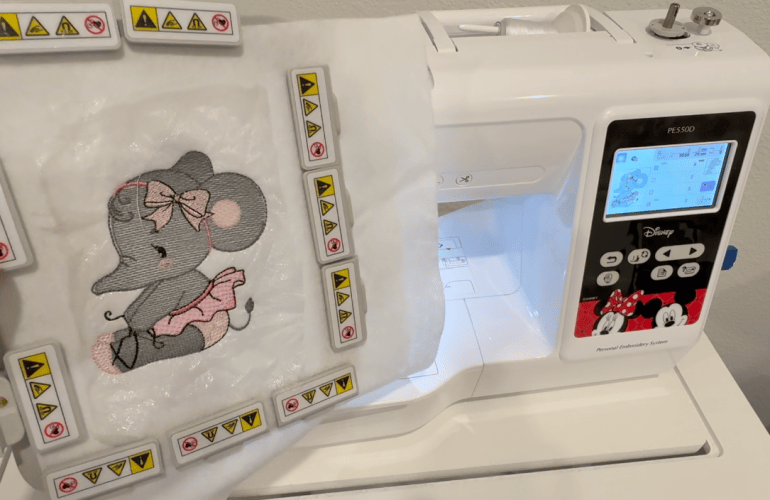
Not even a week ago, I thought magnetic embroidery hoops were only available for the mega-expensive multi-needle monster machines. Then a representative from Sew Tech reached out and asked if I would make a video in exchange for a magnetic hoop. At first, I was suspicious. I had never seen a magnetic hoop compatible with a single needle embroidery machine. As it turns out they actually exist-but do you really need one?
The float method has been my go-to for any project that exceeds a single layer of material. It works, but hooping thicker or multiple layers of fabric can sometimes feel like a wrestling match against the hoop. One of the biggest advantages of a magnetic hoop is how easy it makes hooping thicker materials.
But I did have one major concern: Would it actually be secure enough to embroider?
If your material shifts while you’re embroidering, it can ruin an entire project. Although yes, some magnets shifted, the other magnets were strong enough to compensate for it. I honestly wasn’t expecting them to be quite that strong.
Strong magnets are obviously crucial to the whole concept, but there is a downside too. My scissors kept getting pulled toward the magnetic field whenever I went to cut the jump stitches. Using all-metal scissors is probably the worst combination for this. Switching to scissors with a plastic shell may help combat the issue. Another option could be temporarily removing the magnet closest to the area you’re trimming.
Most of the magnetic hoops I’ve seen have a connected form, so having separate magnets comes with some pros and cons. A pro is having the ability to customize how many magnets are used and where you place them. You no longer have to sandwich the entire hoop area if your project doesn’t require it. The downside is that multiple magnets do take a little extra time to position and remove. That said, I don’t think it takes much longer than using a standard hoop. In some cases, it may actually be faster since you aren’t having to press or screw the hoop pieces together. Plus it is fun to use.
Do you NEED a magnetic hoop? Probably not.
Does a magnetic hoop make certain projects easier? Absolutely.
I’m excited to officially add a magnetic hoop to my embroidery toolbox. I don’t think it’s going to replace my standard hoops for every project, but I can definitely see myself gravitating towards it more. If you are curious about trying one you can purchase it from Amazon or their website. If you use Sew Tech’s website you will receive a small discount if you type in the promo code “SEWTECHBREANA26” at checkout.
Watch my First Time Trying a Magnetic Embroidery Hoop
*I do get a small commission if you decide to purchase one of the items using the links above.