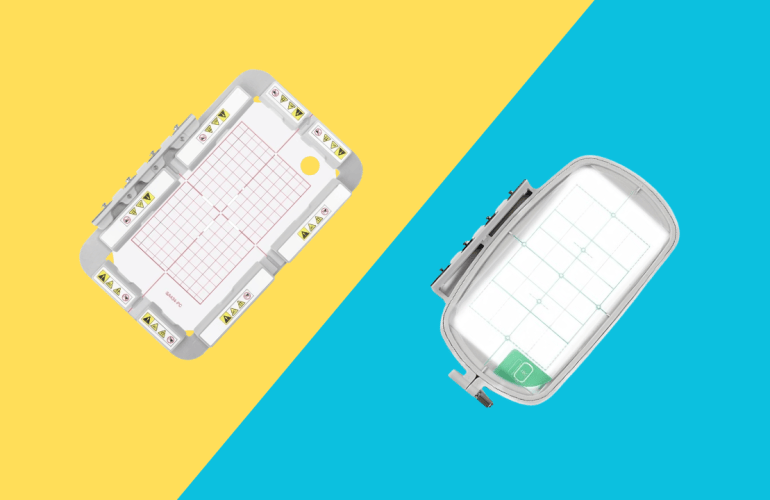
Magnetic Multi-Position Hoop vs Standard Multi-Position Hoop | Sew Tech Review

Recently, I tried our first ever magnetic embroidery hoop which was amazing. Can you believe the company reached back out offering to send me ANOTHER magnetic hoop? At first I thought it was a mistake but they wanted me to review another hoop of my choosing. This time I selected their magnetic multi-position hoop. The multi-position hoop really increased my project creativity scope so why not add another to my tool box. Team, no more wrestling the front hoop and screw.

I want to first address the fact that all opinions are my own. The company did not say I could only talk about the positives nor are they paying me to post this content. There is no contract just the understanding that I would review the product in a video format.

Since this is not my first time using a multi position hoop I dreamed up this beautiful holiday project to use for the review. After three attempts at my pretty ballerina nutcracker appliqué towel, I decided to pivot to a comparison. I started to wonder if the hoop had odd dimensions making it impossible to line up.

For this test I was examining three main factors. First hooping easibility. This one goes to the magnetic hoop: I always struggle pressing that darn top piece into the standard embroidery hoop. Second, is stability when hooped. In the video you will see the tug test in action even with a limited amount of magnets. This one is a tie because the stand hoop also does a great job keeping everything in place. Last up, stitch out success. After changing the project file they both had successful stitch outs so its a tie. With the ease of hooping being the main difference I believe it is enough to take the leap and invest in a magnetic hoop for your machine. Trust me you’ll thank me. The one thing to be wary of is pinching your fingers in between the magnetic hoop base and the magnets themselves. They are really strong!

Watch the side by side comparison below.

What is your favorite part of  machine embroidery?

XOXO Faith

Shop my Essentials on Amazon

Sew Tech 4X4 Magnetic Hoop

Sew Tech Multi-Position Magnetic Hoop

Use "SEWTECHBREANA26" at checkout for a discount on Sew Tech's website.

*I do get a small commission if you decide to purchase one of the items using the links above.

Embroidery Patches: Creating & Adhering

Any embroidery file can be created into a patch. It may seem a bit daunting at first but it is possible. There are what I call “finished” patches that have a satin border around the edges and “base level” patches that are stitched on felt material. The main goal of both types is to prevent fraying. Neither option is honestly better than the other.

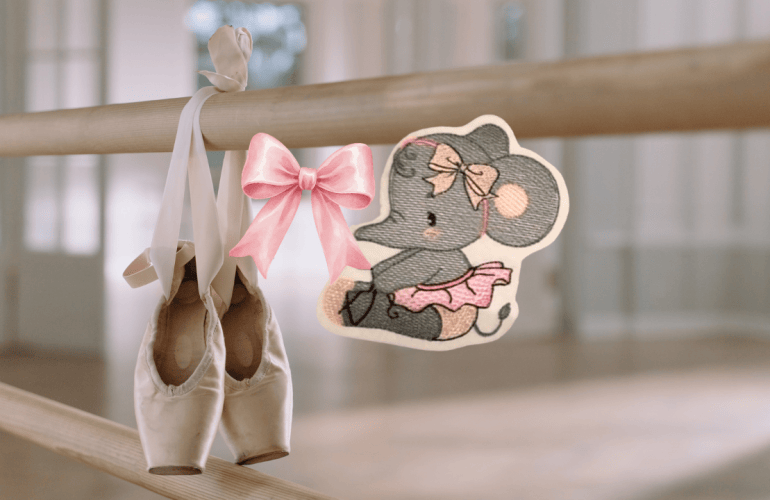
Last time we stitched out a cute little ballerina elephant design and in the video below I showcase how to turn it into a patch. Turning something into a patch is simple:  either embroider it on felt or add a satin shaped border to a design. If you want the off-set outlined patches you’ll need to purchase some fancy software or a design that is already digitized that way.

There are a few of ways to adhere a patch; sewing, glueing, iron on, velcro and temporarily pinning. The approach you choose should be dependent on the material/item you are wanting to put the patch on. In this case I decided to add the patch to a small cosmetic bag that I will be using as a sewing tool bag. While it may seem simple to iron it on by adding Heat N Bond, there was an issue with the construction of the bag and material. So, I had to pivot to another method as you will see in the video below.

Overall, I am still very new to the world of patches because I have steered clear of them due to fear of not having the fancy software. Just try it! It’s no different than anything else you embroider. Perhaps the main takeaway from this project was that you can always try alternate ideas to accomplish the same outcome. Also using Heat N Bond on the back of raw stitches is less effective than adding an additional flat layer backing. Perhaps that will be another side by side comparison test later on.


Have you tried creating an embroidery patch?

XOXO Faith

Structured Hat vs Single Needle Embroidery Machine

Most embroidery on curved/shaped hats are created with a multi-needle machine. These are machines  where the hat is able to be worked inside of a curved hoop. As a single needle machine owner who does not want to shell out thousands of dollars it is time to test if it is absolutely necessary. Although I have seen some single needle embroidery done on a hat before they have been structured. Since a structured hat is more difficult, why not try it out. 

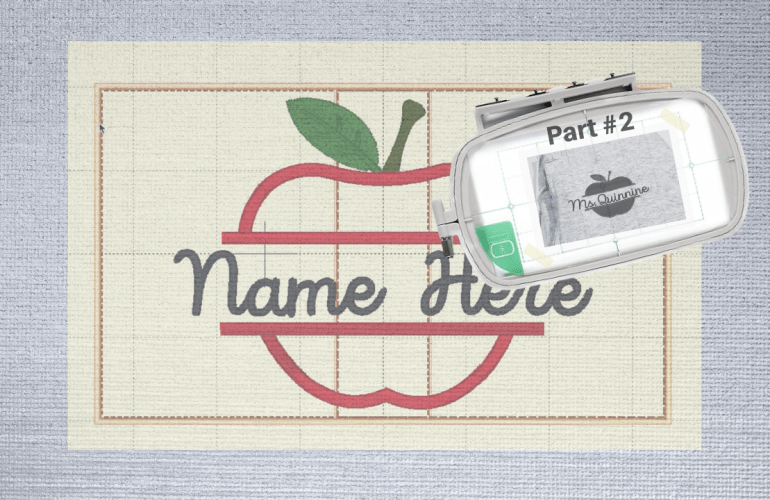
Using a Multi-Position Hoop for an Applique | Part #2

Previously, I went over how to create the file but now it is time to see if it will actually work. I am always curious as to how people embroider. Is everyone stitching out on finished garments or a single piece of fabric? In embroidery advertising I always see them stitch on a single piece of fabric especially for single needle machines. This seems so unrealistic to me unless you are only embroidering on garments you are in the process of sewing. Perhaps it is because embroidering on sweatshirts is a nuisance for everyone, unless you have the ability to use a magnetic hoop. If you are also struggling, I recommend the float method, hooping only the stabilizer, spraying basting spray on the garment and then placing it on top of the hoop. 

How to: Fix Self Threader on Embroidery Machine

While posting videos about my embroidery machine a couple of people have asked how to fix the self thread feature. At the time I did not know how to help as I had never experienced an issue with the self threader on my embroidery machine. Fast forward a couple of months, now the self threader on my machine stopped working. Sometimes it would work and sometimes it wouldn’t. Once the self threader stopped working consistently, I decided to try to diagnose what was wrong. 

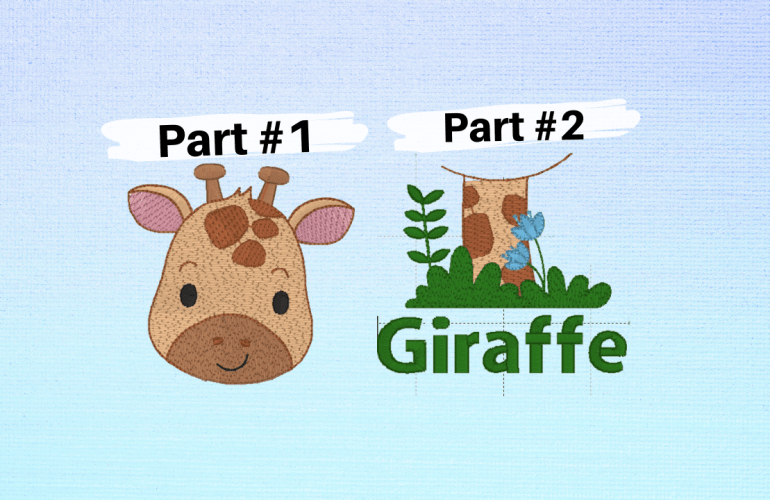
Picture Embroidery | Multi-Position Hooping

While it is possible to do multi-position hooping manually with free software, when it comes to picture files it is not. Being able to split up graphics in embroidery is a game changer. For instance, some creators simply do not design 4X4 hoop designs, so being able to use a 5X7 design opens up new file options. Also, some files that say they are 4” but are too large for an actually 4X4 hoop can be used with multi-hooping.