
Structured Hat vs Single Needle Embroidery Machine

Most embroidery on curved/shaped hats are created with a multi-needle machine. These are machines  where the hat is able to be worked inside of a curved hoop. As a single needle machine owner who does not want to shell out thousands of dollars it is time to test if it is absolutely necessary. Although I have seen some single needle embroidery done on a hat before they have been structured. Since a structured hat is more difficult, why not try it out. 

This was a project that was requested by my sister, but I was honestly not sure it would even be possible. As if the odds were not already stacked against me, she wanted to use a Major League Baseball hat. Any sports fans/ hat enthusiast will know that these are a pretty penny ($50+). In any other circumstance I recommend testing out stitches and files prior to stitching on the final product. There was not enough time to test stitch out these files nor did I wish to purchase yet another structured hat. Here is the mockup I was provided to use as a reference. 

Obviously, using the float method is essential to success as this type of hat cannot be completely flattened. The stabilizer I decided to go with was multiple layers for water soluble stabilizer so that there would not be any remnants left behind. Online’s recommendation is to use tear away stabilizer for hats but I did not have any on hand. That being said I did not have any major issues with the water soluble stabilizer. The main concern was that the stabilizer would be too fragile and break while stitching but it is surprisingly very sturdy. 

Some advice I would like to give is to stay wary of the frame lines on the hat, this was not possible for the desired design but is something to consider as it is harder on the hat as it is hardest to manipulate at those points. Another thing I would like to provide caution on is the larger emblem: while it embroidered well, it did leave a lot of bulk on the underside of the hat. If I get a request to embroider on a hat again, next time a patch would stitch out easier, safer and provide a cleaner finish overall. Although this is not a project I enjoyed creating I will say it did turn out rather nice. The main reason I would not want to redo this project is that just looking at it makes my fingers cramp up. To see the this project in action watch the video below. 

Essentials for this Project:

Starter Embroidery Thread Kithttps://amzn.to/4fq7PKR

Black/ White Embroidery Threadhttps://amzn.to/458XWxB

Bobbins in Bulkhttps://amzn.to/4ow8D4Y

Water Soluble Stabilizerhttps://amzn.to/4lohtil

Curved Embroidery Scissorshttps://amzn.to/3J8xn2N

Quilting Yellow Pinshttps://amzn.to/4pvOqfp

Sewing Pins Blackhttps://amzn.to/3M1g2u4

Similar Embroidery Machinehttps://amzn.to/4oFIvVo

Sewing Cabinethttps://amzn.to/4p9pAS7

*I do get a small commission from Amazon if you decide to purchase one of the items using the links above.

How do you think I did?

XOXO Faith

How to | Combine Layers or Colors in Embrilliance Embroidery Software

When using an embroidery file one thing among many I look for is how many times I have to change my thread. If you have a multi-needle machine this is not even on your radar but some of us are still struggling. One of the perks of Embrilliance essentials is being able to switch up the order of each color/ section of embroidery. 

How to Move Files to an Embroidery Machine

Most embroidery machines have a USB port to be able to access files from outside of the base designs. There is no way to move an actual file to the machine itself. All files stay on the drive and are read from the drive itself. I would recommend dedicating a USB drive solely to your machine. Keep all the files organized so you are not constantly clicking through several pages searching for the new file you saved. 

Line Up Split Embroidery using Free Software

Creating a larger than hoop project can be frustrating and seem almost impossible at times. I am still using a 4×4 hoop but I’ve learned a few tricks along the way. For those who are not ready to invest in embroidery software, there is still a way to create the same results. I will however, admit that the investment in the software is worth every penny since it saves time and prevents frustrations. 

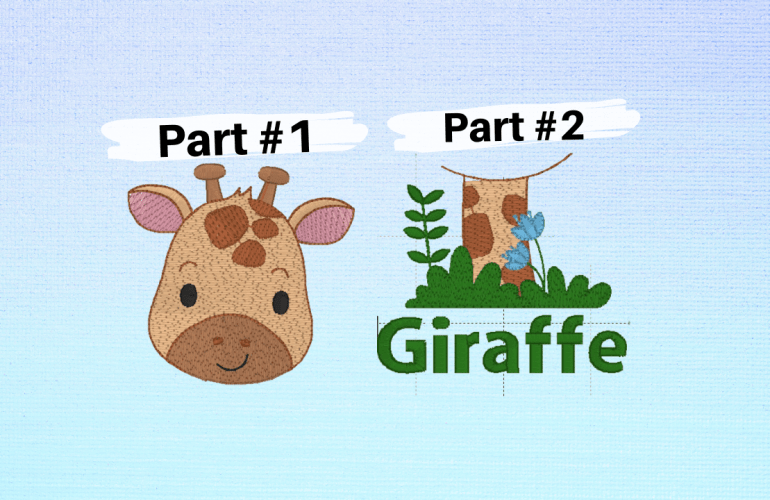
The free software is called Embrilliance Express. The software I am using in the video may look a little different since I have paid for Embrilliance Essentials, but the functions I use in the tutorial are all available in the free version. First, in order to split the word you are embroidering, you will need to split it into multiple files. Part one should have the majority of the letters. Try to use only a couple of letters for part two to allow the machine more room to line up with the first section. 

Sewing Cabinet Review: Judy by the Arrow Sewing Company

After a little over a year of using this guy I am sharing with you all my thoughts on the Judy sewing cabinet by Arrow Sewing Company. This has been used in a lot of my embroidery tutorials but is it worth it? First, I want to say that this guy is not cheap, material wise or price.  The model that I have retails for $799.99 on the brands website but on Amazon it is $385.  Mine was from Amazon as it was purchased from my wedding registry by a dear friend of ours. 

How to: Fix Self Threader on Embroidery Machine

While posting videos about my embroidery machine a couple of people have asked how to fix the self thread feature. At the time I did not know how to help as I had never experienced an issue with the self threader on my embroidery machine. Fast forward a couple of months, now the self threader on my machine stopped working. Sometimes it would work and sometimes it wouldn’t. Once the self threader stopped working consistently, I decided to try to diagnose what was wrong. 

How to Change the Hoop Size in Embrilliance

One question I often get asked is how to change the hoop size in Embrilliance. There are a few videos where I have explained how to do this but I wanted to dedicate a video solely to hoop sizes for people to reference. Whether you want to change your hoop to a smaller one or you’re trying to find the multi-hoop function, this video is for you. I have absolutely fallen in love with multi-hoops since it cuts down the amount of re-hooping and eliminates the stress of lining up a design.

Picture Embroidery | Multi-Position Hooping

While it is possible to do multi-position hooping manually with free software, when it comes to picture files it is not. Being able to split up graphics in embroidery is a game changer. For instance, some creators simply do not design 4X4 hoop designs, so being able to use a 5X7 design opens up new file options. Also, some files that say they are 4” but are too large for an actually 4X4 hoop can be used with multi-hooping.

Enlarge your Embroidery Machine Field | Multi-Position Hooping

Feeling like you’ve picked the wrong embroidery machine and contemplating purchasing a new one? Before paying out hundreds of dollars if not thousands on a new machine, try a multi-position hoop. Out growing a machine sucks but thankfully there are ways to hack the system to go beyond the hoop’s limitations. 

Although using a multi-position hoop is not 100% free, it is a whole lot cheaper than a new machine. There are two things required for multi-position embroidery, software and a specific hoop. The software I chose is called Embrilliance Essentials, which cost $149.95. Multi-position hoops can be found on Amazon in sets or singles for around $15.99. These hoops have four notches rather than the standard two. 

Larger than Hoop Embroidery | Multi- Hooping Free

While it may seem like you need a larger hoop to accomplish certain creative projects try this multi hooping hack first. This is a free solution when you want to escape the boundaries of your machine’s hoop size. The machine I use is the Brother PE550d which has a 4X4 hoop, so trust me I know the struggle.